


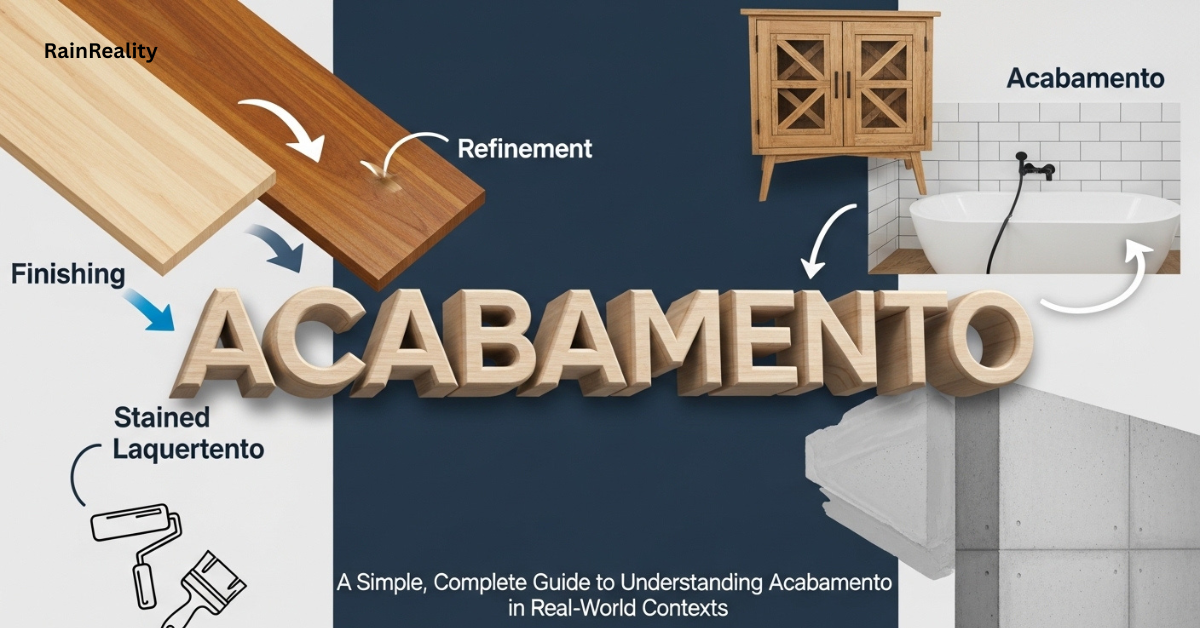
Is the quality of your do-it-yourself home improvements something you’re after to improve? One word—acamento—may hold the key. The Portuguese word for “finish” comprises a myriad of options for giving any surface that flawless appearance. If you want to take your painting, furniture restoration, or handmade dcor to the next level, learning Acamento is a must.
But what does the word “Acamento” actually mean? To what extent does it matter in the field of art and design? Learn how various finishes, such as matte, glossy, and satin, can change the visual appeal of your projects as we progress through this comprehensive guide. Here are some secrets to getting the perfect finish every time: how to choose the correct one for your project and more!
Understanding Different Types of Finishes: Matte, Glossy, and Satin
It is critical to understand the features of finishes because they can significantly alter the appearance of a project.
Because they don’t reflect light, matte finishes are very desirable. Light is absorbed by them, making flaws less noticeable. They are perfect for walls or furnishings that need a delicate touch because of this.
Conversely, glossy coatings reflect light well and sparkle brightly. Although they exaggerate imperfections, they do give the skin a more lively appearance. In high-traffic areas like kitchens and bathrooms, where toughness is paramount, glossy surfaces are frequently used.
The matte and glossy ends of a material’s spectrum are met by satin finishes. Whether you’re working with trim or cabinetry, satin’s subtle shine will provide visual interest without being overwhelming. This versatile finish lets you express your taste without compromising on functionality.
Your aesthetic goals and functional needs in each room will determine the proper finish.
Choosing the Right Finish for Your Project
Making the proper choice of finish can elevate your project to a whole new level. Think about why you’re writing this piece first. Is it meant for heavily populated places or is it purely ornamental?
The subtlety and softness of matte surfaces make them ideal for use in contemporary interior design. While they do a good job of hiding flaws and reducing glare, they might not hold up as well in other situations.
Conversely, glossy coatings are striking and colourful. They are attractive when done properly, but they can draw attention to imperfections if not used properly.
Satin provides an intermediate finish between matte and glossy materials. It leaves a subtle gloss without being harsh on surfaces.
Think carefully about how each finish fits in with your overall plan and the space you have available. Before settling on a single style, try out a few different samples to get a feel for the final product.
How to Achieve a Smooth and Flawless Finish with Acamento
You need to be well-prepared to use Acamento to get a smooth and perfect finish. Before you do anything else, make sure the area is clean and clear of any grease or dust. The groundwork for an ideal application is laid at this stage.
Prime the surface using an appropriate product for your job. To improve adhesion and achieve a level base, use a high-quality primer before applying the Acamento.
Make sure the Acamento is evenly distributed by using high-quality brushes or rollers while applying it. Apply the paint in thin layers to avoid drips and smooth out any bumps.
To avoid flaws, make sure to let each coat dry well before applying the next. Stay calm and collected.
Lightly sand between layers after you reach the required thickness, if necessary. This method is great for getting that smooth, polished look you want by getting rid of any rough spots.
You May Like: Boelis: Meaning, Origin & Why It’s Trending
Tools and Techniques for Applying Acamento
Having the proper equipment is crucial while utilising Acamento. In order to get control and precision, you need a good brush. Choose synthetic bristles because they complement a wide range of surfaces.
A foam roller can evenly apply the product without streaks across bigger areas. It’s ideal for surfaces that require a smooth finish, such as walls or furniture.
The preparation is essential! To get the perfect surface for Acamento, sanding is a must. Before you begin painting, use fine-grit sandpaper to remove any blemishes.
Additionally, methods are crucial. To avoid drips and get better adhesion, apply multiple thin coats instead of one thick one. For best results, always adhere to the manufacturer’s instructions about the drying time between applications.
Finding the approach that works best for your project requires some trial and error; the creative process is all about expressing yourself via these decisions.
Common Mistakes to Avoid When Using Acamento
Acamento has the potential to revolutionise your projects, yet it’s easy to make mistakes that could ruin them. A common mistake is using too much product all at once. Drippy surfaces and other imperfections are common results of this.
Failing to adequately prepare is another typical mistake. If you don’t prime or sand beforehand, you can end up with less adhesion and a less shiny finish.
Another important factor is temperature. Applying acamento in very humid or hot conditions could delay drying times, which could cause permanent flaws.
Another trap is to hurry through the application. To get that flawless result, you must be patient and work slowly, layer by layer.
Unwanted surprises can arise if you don’t test on a tiny region initially. For best results, try a small area with your selected finish before applying it evenly to a larger surface.
Conclusion
The artistic practice of accamento elevates any endeavour above that of a mere finish. You can make educated decisions when you know its importance and the many finishes that are accessible. Matte, glossy, or satin finishes all have their own special allure that you may incorporate into your artwork.
Think about the function and visual appeal of your project before deciding on a finish. It takes time, effort, and the right methods to get a smooth and perfect look. One of the most important factors in producing expert results is investing in high-quality instruments.
You may save yourself a lot of trouble and time as you learn to use Acamento if you steer clear of typical mistakes. If you put in the time and effort, and use your imagination, your creations will have the flawless finish that Acamento is known for.
Continue your exploration, try out new designs, and let your creativity run wild as you create stunning finishes!